
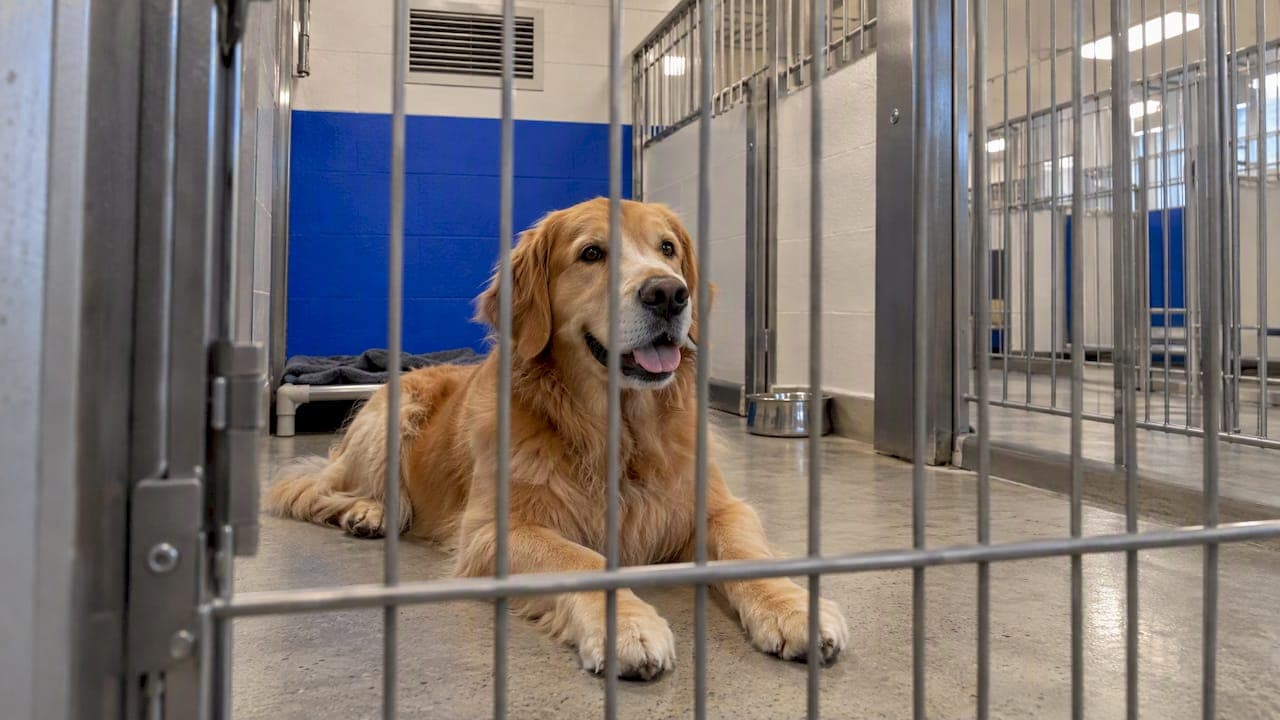
Extended stay dog boarding means your dog stays at a facility for a week or more while you travel, work away, or deal with a move or a family event. A longer stay needs more planning than a weekend. You need current vaccines, enough food and medication, a clear emergency plan, and a facility that keeps your dog’s routine steady. This guide covers all of it, and shows how we handle longer stays at Riverside Pet Club & Resort in Central Pennsylvania.
TL;DR
-
Stays of one week or more are usually treated as long-term or extended boarding, and they call for more preparation than a short stay.
-
Pennsylvania law requires boarding kennels to ask for proof of an up-to-date rabies vaccination. Bring all vaccine records before your first night.
-
Book a short trial stay first, tour the facility, and leave written instructions, enough food and medication, and emergency contacts.
-
Ask about daily exercise, staff contact, play group matching, 24-hour monitoring, and what happens in a medical emergency.
-
Riverside offers boarding with climate-controlled kennels, daycare add-ons, grooming add-ons, and 24-hour security. Call us to plan your dog’s stay.
Table of Contents
What counts as an extended stay
There is no legal definition. Most facilities and guides call a stay of about seven nights or more long-term, and stays of 7 to 14 nights are often called extended boarding, according to one boarding guide. Past that, you are in long-term territory: three weeks, a month, or a winter away.
The difference from a weekend is not just length. A short stay is mostly about getting through a few nights. A long stay is about routine. Your dog needs steady meals, regular exercise, predictable rest, and people who notice small changes in appetite or mood over many days.
That is why we ask owners to plan longer stays with us early. We want to know your dog’s habits before the first night, not on day six.
Who needs long-term boarding
Most of our longer stays come from a few situations:
-
Vacations of one to three weeks.
-
Work travel or a temporary job assignment.
-
A move, when your new home is not ready.
-
Home repairs or renovation, when a house is loud, dusty, or has open doors.
-
A hospital stay or family emergency.
In each case, the question is the same: will your dog be safer and calmer in a facility, or at home with a sitter? Boarding works well for dogs that do fine around other dogs and people. Some dogs do better with a friend, relative, or pet sitter at home, or in another home, as the VCA Animal Hospitals boarding guide notes. It is a real choice, and your dog’s temperament should decide it.
Prepare your dog before the stay
Start with a trial stay
A weekend or a few days at the facility before a long absence is worth it, VCA advises. The AKC adds that test runs help a facility assess temperament, how a dog plays with others, and separation anxiety. They also let you see how your dog comes home: healthy, and without signs of distress such as heavy panting, drooling, or a stiff body.

At Riverside, new daycare dogs start with a one-time evaluation, listed at $20. You can read about it on our daycare page. It is a low-cost way to see how your dog handles our staff, our space, and other dogs before you book a long boarding stay.
Vaccines and records
Pennsylvania law says the owner or operator of a boarding kennel must require proof of an up-to-date rabies vaccination from the owner of each dog it takes in. Facilities often ask for more. The AKC notes that many states require kennels to keep vaccination records, and facilities may ask for proof of basic annual vaccines. VCA lists rabies, distemper, parvovirus, and Bordetella as the usual set.

Check the dates on every shot. A vaccine that expires on day nine of a fourteen-day stay is a problem. Ask your vet to update anything that will lapse while you are away.
Food, medication, and written instructions
The American Veterinary Medical Association says to give the facility enough food, medication, and supplements to last the whole stay plus a few extra days, with detailed written instructions. For a long stay, that means:
-
Pre-portion meals in labeled bags or containers.
-
Write down feeding times, amounts, treats, and any foods your dog cannot have.
-
List each medication with dose, time, and how your dog takes it.
-
Note habits: fear of thunder, a dislike of certain dogs, how your dog likes to sleep.
-
Pack a familiar blanket or toy, if the facility allows it.
Changing a dog’s food during a long stay can cause stomach upset, so we recommend bringing your dog’s regular food.
Emergency contacts and authority
The AVMA asks owners to name an authorized decision-maker, give contact details for your regular vet and a preferred emergency clinic, and set financial and treatment limits. It also suggests adding that person as an alternate contact in your dog’s microchip registry. If you will be on a plane or out of signal for days, this matters more than anything else on the list.
What to expect from the facility
A long stay is only as good as the daily routine behind it. The AKC’s care and conditions policy lists what dogs should get: daily exercise and positive human contact, fresh water and food at proper intervals, daily health and behavior checks, clean and adequately sized housing, clean bedding, enough staff, and an emergency plan.
The San Francisco SPCA suggests asking these questions:
-
Do attendants monitor the animals 24 hours a day?
-
Do dogs get at least three potty breaks a day?
-
Is there one-on-one time with a person?
-
Are play groups separated by age, size, and energy level?
These questions matter more the longer your dog stays. On night two, a dog can put up with a missed walk. On night twenty, it adds up.
Questions to ask on a tour
The AKC says to confirm that the kennel allows tours, asks for immunization records, cleans crates and play areas, quarantines dogs showing concerning symptoms, and has veterinary emergency arrangements. Bring that list. Also ask:
-
How is the air handled? Is the space climate-controlled?
-
How long will my dog spend in a kennel versus out playing?
-
Who gives medication, and how is it recorded?
-
How will you reach me, and how often will you update me?
-
What happens if my dog stops eating or seems low?
A good facility answers plainly and lets you look around.
What longer stays cost
Prices vary by region, dog size, and add-ons, and a month at a facility can add up quickly. Ask for a written quote that shows the nightly rate, the add-ons, medication fees, and any holiday charges. Do not assume the rate stays the same for every day of a long stay.
Here are our published prices at Riverside. Please check our site or call for how rates apply to your dog’s dates.
| Service | Price |
|---|---|
| Boarding | $45-$50 |
| Daycare with Boarding | $22 per day |
| Boarding with grooming add-on (bath, nails and ears) | $47-$78 |
| Riverview walk | $10 |
| Nails/Ears | $15 |
| Teeth Brushing | $15 |
| Furminator/De-Shedding | $25 |
Full details are on our boarding page.
Make a long stay easier on your dog
A few add-ons help a dog with a lot of days ahead of it.
Daycare play. Dogs with energy to burn can pair boarding with daycare time. Our daycare uses small play groups, so social dogs get exercise and company. See the daycare program.
Walks. A Riverview walk is listed at $10 and gives your dog extra time outside.
Grooming before pickup. After two or three weeks, a bath, nail trim, and brush-out make for a cleaner dog at pickup. Our grooming services include baths, de-shedding, nail grinding, teeth brushing, and more. Coming home to a fresh dog is a nice way to end a trip.

Our perspective on long stays
We see the same pattern with longer stays. Owners worry most about the first night and the last few days. In between, a steady routine does most of the work.
Our kennels are large and climate-controlled, with advanced air filtration. We built them that way because a dog who is going to spend many days indoors should have clean air and room to move. We also run 24-hour security, so you are not guessing about the building when you are far away.
Our advice is simple. Visit first. Bring complete records. Write instructions as if a stranger will read them, because one will. And tell us the small things, like the dog who only eats when someone sits nearby. Those details are what let our team care for your dog the way you do.
— Elizabeth
Book an extended stay at Riverside
If you are planning a week or more away, we can help you set it up. Riverside Pet Club & Resort serves dog owners across Harrisburg, Dauphin County, and Central Pennsylvania. Start with our boarding page to see rates and options, add daycare or grooming if your dog would enjoy it, and get in touch to talk through your dates.

New to us? Schedule the one-time evaluation first so your dog gets to know the team before the long stay begins. You can find everything on our home page too.
Is boarding right for your dog?
Boarding is not the right answer for every dog. Think twice if your dog:
-
Has severe separation anxiety and does not settle even after a trial stay.
-
Is fearful or reactive around other dogs or strangers.
-
Has a medical condition that needs frequent, specialized care.
-
Shows distress after a short stay, such as heavy panting, drooling, or a stiff body, which the AKC lists as signs to watch for.
In these cases, talk with your vet. A sitter at home or a trusted friend may be a better fit. If your situation has changed for good and you can no longer keep your dog, we also offer surrender and rehoming services.
A checklist for the week before drop-off
-
Confirm vaccine dates cover the whole stay, and send records to the facility.
-
Complete the evaluation or trial stay if you have not already.
-
Portion food and pack medication with a few extra days’ supply.
-
Write out feeding, medication, and habit notes.
-
Name an emergency decision-maker and share your vet’s and emergency clinic’s contact details.
-
Update your microchip registry with an alternate contact.
-
Agree on how and when the facility will update you.
-
Confirm drop-off and pick-up times, and who may collect your dog if your plans change.
FAQ
How long can a dog stay at a boarding facility?
There is no standard limit. It depends on the facility, space, and your dog’s health and behavior. Many places welcome stays of a week to a month or more. Call us with your dates so we can confirm availability.
Is it bad for a dog to board for two weeks?
Not for most healthy, social dogs that have been prepared. A trial stay, a steady routine, and a facility with daily exercise and attentive staff all help. If your dog shows distress after a short stay, talk with your vet before booking a longer one.
What vaccines does my dog need for boarding in Pennsylvania?
State law requires boarding kennels to ask for proof of an up-to-date rabies vaccination. Many facilities also ask for distemper, parvovirus, and Bordetella. Check with us for our requirements and ask your vet to update anything that will expire during the stay.
Should I bring my dog’s own food?
Yes. Bring enough for the whole stay plus a few extra days, in labeled portions, along with written instructions. Keeping your dog’s regular diet helps avoid stomach upset during a long stay.