Dog enrichment means giving your dog safe chances to sniff, search, chew, learn, move and socialize. The easiest places to start are a scatter-fed meal, a sniff walk and a short training game. Rotate them through the week so your dog does not get bored. Below you will find activities for adults and puppies, plus the safety rules that keep them fun.
TL;DR
- AAHA lists five types of enrichment: cognitive, food, sensory, physical and social. Mix them for the best results.
- Quick wins: scatter feeding, a snuffle mat, a muffin tin puzzle and a long, slow sniff walk.
- Match the difficulty to your dog. Start easy, then make it harder as your dog gets good at it.
- Choose toys that fit your dog's size and chewing style, and supervise anything new.
- Puppies need short, frequent sessions. Skip hard running and big jumps while they grow.
Table of Contents
- What enrichment is and why it matters
- Food and foraging activities
- Scent and sensory activities
- Thinking and training games
- Physical enrichment and play
- Calming enrichment for dogs that get wound up
- Mental stimulation for puppies
- Safety rules for every activity
- A simple weekly plan
- Perspective: what we see at Riverside
- Add social enrichment with daycare
- FAQ
- Sources
What enrichment is and why it matters
Enrichment gives your dog something worthwhile to do with its brain and body. A walk around the block covers some exercise. It does not cover the searching, problem solving and chewing that dogs are built for.
AAHA says dogs do best when enrichment is varied. It adds that mental challenges can be as tiring as physical exercise and often reduce behaviors driven by boredom. VCA Animal Hospitals explains that dogs are natural hunters and scavengers. Foraging toys let them sniff, chase, manipulate, lick and chew, which dogs enjoy.
The five types give you a simple checklist for the week:
| Type | What it looks like | Examples |
|---|---|---|
| Cognitive | Thinking and learning | Puzzle toys, training, hide-and-seek |
| Food | Working for a meal | Stuffed toys, scatter feeding, snuffle mats |
| Sensory | New smells and textures | Sniff walks, rotating toys |
| Physical | Moving the body | Walks, fetch, gentle tug, balance work |
| Social | Company | Family time, compatible dogs, group play |
Food and foraging activities
Mealtime is the easiest place to add enrichment. Instead of a bowl that empties in 30 seconds, make your dog work a little.
Scatter feeding and "find it"
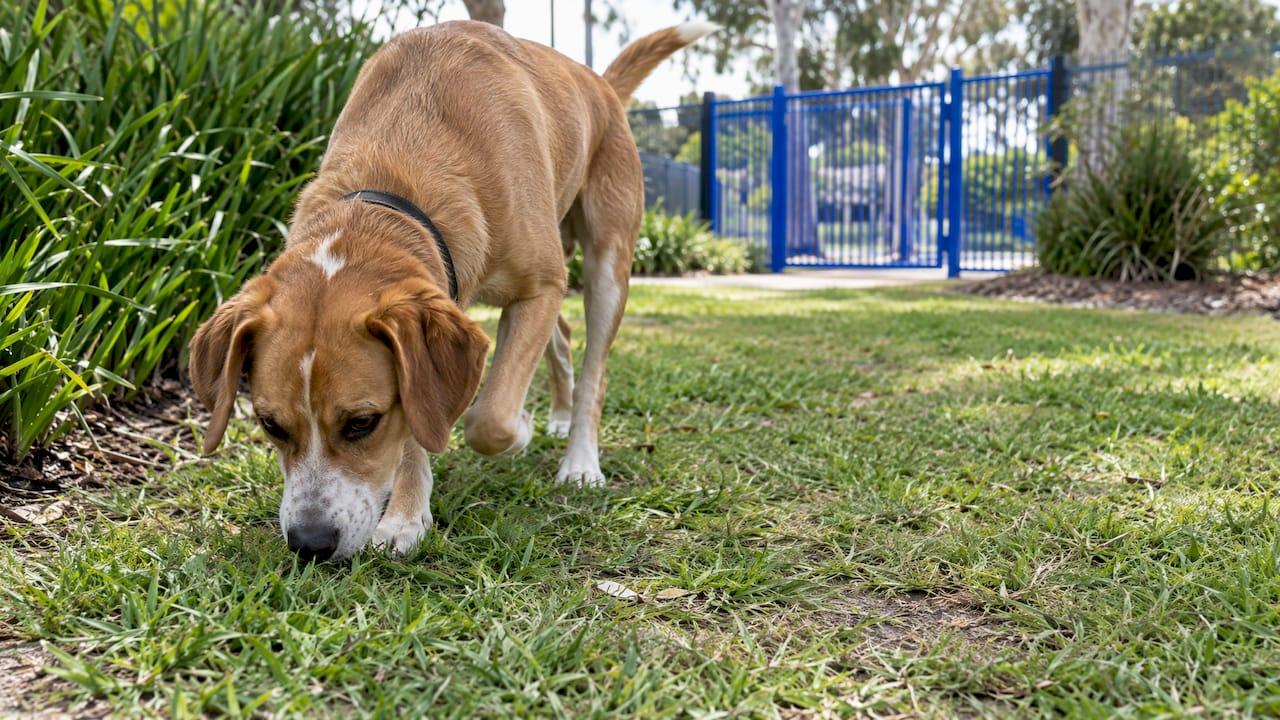
PetMD describes scatter feeding as hiding portions of dry food around the house or yard. Your dog uses its nose to find each piece. To play "find it," toss a few treats on the floor and say the cue. Then hide them behind a chair leg or under a towel as your dog catches on.
Snuffle mats
A snuffle mat keeps the food in one place. PetMD notes that the ruffles and pockets hide the food, so your dog has to sniff it out. AAHA's indoor enrichment guide suggests a simple version: sprinkle treats in a folded blanket or towel.
Muffin tin puzzle
Put treats or kibble in some cups of a muffin tin. Cover them with tennis balls, soft toys or crumpled paper. Your dog has to move the covers to get the food. Cornell's veterinary team also lists kibble in a lidless plastic bottle and kibble inside an empty paper towel tube as quick ideas.

Foraging box
Fill a cardboard box with toys, balls and scrunched paper. Hide a few treats inside. Let your dog tear and dig through it. Supervise, and pick up any paper your dog tries to swallow.
Stuffed and frozen toys
AAHA recommends freezing stuffed food toys to make them last longer. It also suggests using part of your dog's normal daily food, so the extra calories do not add up. Ohio State's veterinary center notes that freezing a lick mat can extend licking time too.
Scent and sensory activities
Sniffing is hard work for a dog, and it is calming. PetMD, citing veterinarian Brittany Grenus, says sniffing has been shown to lower a dog's heart rate and release dopamine. That makes scent walks one of the best mental activities you can offer.
The long sniff walk
Cornell's Dr. Aly Cohen suggests a long-leash walk in nature, separate from the quick relief walk. She suggests a 30-foot lead, so your dog can choose where to go, what to smell and when to run or walk. Let your dog lead the pace. Do not hurry it along.
Easy scent games
- Hide a treat under one of three upside-down cups, then let your dog pick.
- Start with a few treats in plain sight, then move them to harder spots.
- Hide a favorite toy in another room and ask your dog to find it.
- Hide yourself. Hide-and-seek is a classic.
New textures and rotating toys
Sensory enrichment also covers feeling different surfaces and exploring new places. At home, put out a rubber mat, a towel or a cardboard box for your dog to investigate. AAHA advises rotating toys in small groups every few days instead of leaving them all out. A toy that returns after a week feels new again.

Thinking and training games
Teaching a new skill uses the brain as much as any puzzle. Short sessions with small treats work well.
- Mat work. Reward your dog for settling on a mat. This is also a useful calm-down cue.
- Impulse control. Ask for a sit before the bowl goes down or the door opens.
- New tricks. Spin, paw, "touch" or putting a toy in a basket.
- Hidden treasure. The AKC suggests placing small boxes or flower pots upside down and hiding a treat under just one.
- Indoor agility. The ASPCA recommends an indoor agility course built from furniture and household items, with high-value treats as rewards. Keep the obstacles low and stable.
End each session while your dog is still keen. Five minutes done well beats twenty minutes of frustration.
Physical enrichment and play
Play covers exercise, mental stimulation and social contact. VCA says sessions should fit your dog's likes and skills. It suggests gentle tug, hide-and-seek and fetch. Watch your dog's excitement level. If it climbs too high, take a break or switch games.
Tug, fetch and flirt poles
Tug should be gentle enough that your dog is not hurt. VCA says to stop and consult a behavior professional if you are worried about aggressive growling during tug. The ASPCA also describes a homemade flirt pole, made from a 1-inch PVC pipe or broom handle with a rope and a toy attached. Keep the toy moving low to the ground and let your dog catch it often.
Walks with a purpose
Vary your route. A new street, park or trail gives your dog fresh smells and sights. After a good run of fetch and long walks, some owners like to mark the occasion with a custom dog trading card made from a favorite photo.
Calming enrichment for dogs that get wound up
Not every activity relaxes a dog. Ohio State's veterinary center cautions that some toys excite a pet instead of soothing it. Pick the toy for the level of engagement you want.
For calm, try these:
- A lick mat spread with a thin layer of food. Freeze it for longer licking.
- A snuffle mat after a busy day.
- A stuffed chew toy in a quiet spot.
- A slow sniff walk instead of a fast one.
- Mat work, with treats given while your dog lies down.
Save chasing games and tug for the times you want energy out. Use sniffing and licking when you want your dog to settle.
Mental stimulation for puppies
Puppies learn fast, but they tire fast too. AKC explains that a puppy's cognitive skills are still developing. Mental stimulation and play help with memory and problem solving, and cognitive challenges can curb destructive habits by keeping a puppy entertained.
Keep it short and frequent
VCA recommends many short play breaks for young puppies. Their attention spans are short. Good options include gentle tug, hide-and-seek, fetch, puzzles and teaching new words. Do not encourage biting hands or legs.
Puppy-safe ideas
- Scatter a few kibbles around a room.
- Hide a treat under one of several upside-down pots, or play hide-and-seek by calling your puppy to find you.
- Offer toys with different textures.
- Practice walking on different surfaces, like grass, tile and a rubber mat.
The AVMA's socialization review says all puppies should be raised in a socially and physically enriched environment. That means diverse, positive experiences of the right intensity. It also says puppies do best when worked with by 12 to 14 weeks of age.
Royal Canin's veterinary academy adds that during the sensitive learning period, quality matters more than quantity. Aim for experiences your puppy finds positive, not just neutral.
Protect growing joints
VCA says puppies should not routinely jog or run on hard surfaces until 12 months for tiny breeds, and 18 to 24 months for larger ones. It also advises avoiding games with jumps from above elbow height, high leaps, fast stops and sharp, repeated turns. Brain games are a great way to tire a puppy without stressing its body.

Safety rules for every activity
Enrichment should be fun and safe. These rules come from veterinary and animal welfare groups.
- Size and durability. VCA advises a toy that cannot be swallowed and will not easily break into pieces. The AKC says a ball should be wider than the diameter of your dog's jaw.
- Supervise new items. AAHA says to watch your dog with any new enrichment toy. The ASPCA says to observe your dog while chewing. If your dog swallows a chunk of chew material, call your veterinarian right away.
- Inspect and discard. AAHA says to check toys often and throw out anything damaged enough to be a choking hazard.
- Watch the materials. The ASPCA position statement says rubber or hard plastic toys should not fragment into swallowable pieces. A blockage can need surgery.
- Mind the household items. The FDA warns that corn cobs, avocado pits and bones can cause obstruction. It also warns that food bags, especially mylar-type, can wrap around a dog's nose and mouth and suffocate it. Never leave a dog alone with an empty food bag.
- Know the choking risks. The AKC lists balls, kibble, sticks, bones and chews among common causes. It suggests lick mats or tough treat toys for dogs that swallow big chunks.
- Adjust the difficulty. VCA says to start easy to hold interest and prevent frustration, then raise the challenge as your dog gets better. Ohio State notes that some pets get frustrated if a task is too hard and lose interest if it is too easy.
If your dog has a medical condition, a history of swallowing objects or a breathing issue, ask your veterinarian which toys and chews suit it.
A simple weekly plan
You do not need to do everything. Try one or two things a day.
| Day | Activity | Type |
|---|---|---|
| Monday | Scatter-fed breakfast and a five-minute trick session | Food, cognitive |
| Tuesday | Long sniff walk on a new route | Sensory, physical |
| Wednesday | Muffin tin puzzle and a short game of fetch | Cognitive, physical |
| Thursday | Frozen stuffed toy or lick mat | Food, calming |
| Friday | Hide-and-seek around the house | Cognitive, social |
| Saturday | Trip to a new park | Sensory, physical |
| Sunday | Snuffle mat and mat work | Food, calming |
Swap in toys from your rotation every few days. If your dog loses interest, make the activity a bit harder. If your dog gives up quickly, make it easier.
Perspective: what we see at Riverside
We care for dogs every day at Riverside Pet Club & Resort, and we see how much a dog's mood depends on having something to do. A dog that has only a short walk and a bowl of food often has energy and curiosity left over.
That is why we think enrichment should be part of a dog's routine and not an extra. Sniffing, searching, playing and spending time with other dogs all count. At home you can do a lot of that with a snuffle mat, a puzzle or a new trail.
Social time is the one most owners find hard to give at home. Our daycare is built around supervised play and social programs, and our boarding kennels are large and climate-controlled with advanced air filtration. We think a comfortable, healthy space is where good enrichment starts. Dogs relax, and they get more from play, when they feel good.
Every dog is different. Some love group play, and some want quiet time. Our team gets to know each dog and matches the day to the dog.
Alexis
Add social enrichment with daycare
Social play is one of AAHA's five enrichment types, and it is the hardest to set up at home. Our dog daycare gives your dog supervised time with other dogs in play groups.
- Enrichment Daycare with play groups: $32 per day
- 1-Day Stay: $22 per day
- 1-Time Evaluation: $20
If your dog is staying with us, we offer a Riverview walk (10 to 15 minutes) for $10, and boarding runs $45-50. See our boarding page for details. Not sure if group play suits your dog? Read our guide to reactive dog daycare. You can also read how to choose the right daycare in Pennsylvania.

We serve dog owners across the Harrisburg area and Central Pennsylvania. Visit Riverside Pet Club & Resort to book. If you have a puppy, ask about our puppy daycare program. Celebrating a milestone? Our birthday packages are one more way to make the day special.
FAQ
What are good enrichment activities for dogs?
Good choices include scatter feeding, snuffle mats, puzzle toys, sniff walks, training games and supervised play with other dogs. AAHA recommends mixing food, cognitive, sensory, physical and social activities. Pick ones that suit your dog's age, size and energy.
How do I mentally stimulate my dog at home?
Start with mealtime: hide food in a muffin tin, snuffle mat or foraging box instead of using a bowl. Add a few short training sessions and a game of "find it" each day. Rotate toys every few days so they stay interesting.
What is a calming enrichment activity for dogs?
Licking and sniffing tend to calm dogs. Lick mats, snuffle mats and slow sniff walks are good examples. Ohio State's veterinary center notes that freezing a lick mat can make it last longer. Avoid fast chase games when you want your dog to settle.
How do I stimulate a puppy's mind safely?
Use short, frequent sessions with puzzles, hide-and-seek and new words or tricks. Offer toys of different textures and positive new experiences. VCA advises against hard-surface running and big jumps while a puppy's body is still growing.
Sources
- AAHA: Enrichment, supporting your pet's mental and emotional wellbeing
- AAHA: Boredom Busters, Indoor Enrichment for Dogs
- Cornell: Canine Enrichment Ideas
- PetMD: Ways to keep your dog mentally stimulated
- VCA: Enrichment and Activity Toys
- VCA: Using Enrichment, Predictability and Scheduling
- VCA: Play and Exercise
- ASPCA: Canine DIY Enrichment
- ASPCA: Position Statement on Dog Chews/Treats
- Ohio State Veterinary Medical Center: Toys and Puzzles for Your Pet
- FDA: Potentially Dangerous Items for Your Pet
- AKC: Puppy Exercise and Mental Stimulation
- AKC: Dog Choking Prevention
- AVMA: Socialization of puppies and kittens
- Royal Canin Academy: Puppy behavioral health
- PokeCardStudio: Dog Pokémon Card