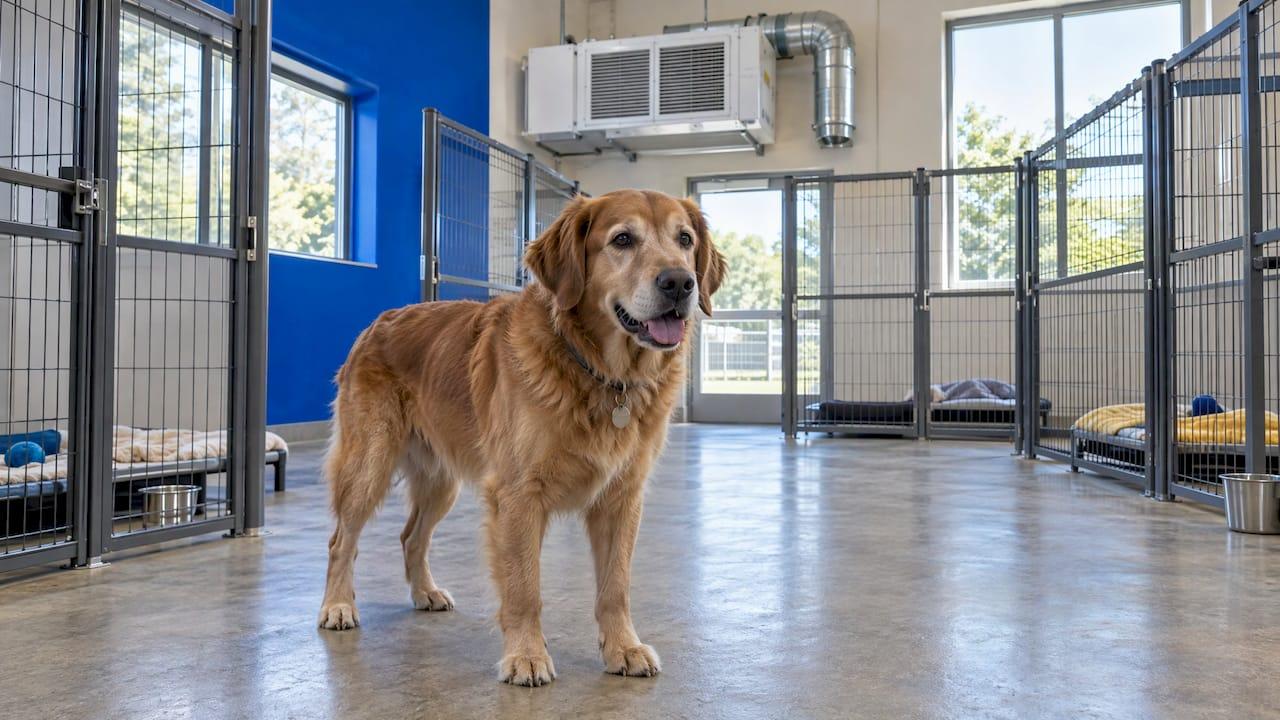
You can lower your dog's risk of kennel cough with three things: the right vaccine at the right time, fewer chances to meet sick dogs, and a boarding, daycare or grooming facility that keeps its air and surfaces clean. No single step gives full protection, so the steps work best together. At Riverside Pet Club & Resort in Central Pennsylvania, our large, climate-controlled kennels with advanced air filtration are built to support a healthier environment for dogs who stay with us.
TL;DR
- Kennel cough is a group of respiratory infections. It spreads wherever dogs share air, surfaces and bowls, including boarding, daycare, grooming and dog parks.
- The Bordetella vaccine does not block infection completely. It can make signs milder, shorten the illness and lower the chance of pneumonia.
- Plan the vaccine before a stay. Intranasal and oral forms start working in about three to five days. Injectable forms need two doses.
- Keep a coughing dog home and away from other dogs. See a veterinarian the same day for fever, poor appetite, low energy or hard breathing.
- Choose a facility with good airflow, clean surfaces and supervised play.
Table of Contents
- What kennel cough is and how it spreads
- Vaccination: what it does and what it does not do
- Everyday habits that cut exposure
- What a good facility does to lower the risk
- Your pre-stay checklist
- If your dog starts coughing
- Boarding, daycare and grooming at Riverside
- FAQ
- Sources
What kennel cough is and how it spreads
Kennel cough is the common name for canine infectious respiratory disease. It is not one germ. PetMD's veterinary review lists several possible causes, including canine influenza, adenovirus 2, parainfluenza, herpesvirus, distemper, Mycoplasma and Bordetella bronchiseptica. Bordetella is the bacterium most people mean when they say kennel cough, and it often joins a virus that has already weakened the airway.
The typical sign is a dry, hacking cough. Some dogs gag or bring up foamy mucus afterward. Many stay bright and keep eating.
Where dogs pick it up
Cornell's Riney Canine Health Center ties kennel cough to close-contact settings such as grooming facilities, shelters, competitions and parks. The infection moves in three ways:
- Droplets from a cough or sneeze.
- Direct dog-to-dog contact, like nose-to-nose greetings.
- Shared items, including door handles, food bowls and water bowls.
Cornell puts the usual incubation period at 2 to 10 days. That means a dog can pick it up on Saturday and start coughing midweek, often after coming home. MSPCA-Angell gives a slightly wider window of 2 to 14 days, and says the illness usually lasts one to three weeks.
An important detail: AAHA's Bordetella education material notes that dogs can carry Bordetella without showing any signs. A dog that looks healthy at the park can still pass it on. This is why prevention cannot rest on "I'd see a sick dog."
Dogs at higher risk
PetMD names flat-faced (brachycephalic) breeds and dogs that visit group settings often as having a higher risk of severe disease. Puppies, seniors and dogs with other health conditions deserve extra planning too. If your dog is in one of these groups, talk with your veterinarian before any stay.
Vaccination: what it does and what it does not do
The Bordetella vaccine is the first step most veterinarians recommend for dogs that board, go to daycare or visit groomers. It helps to know what you are buying.
Cornell describes it as a lifestyle vaccine for dogs at least 12 weeks old. It is meant for dogs that board, visit the grooming salon or play at dog parks. Cornell compares it to the human flu shot: it does not stop every infection, but it can lessen symptoms, such as pneumonia, and reduce the need for emergency care.
The American Kennel Club says the same thing in plain terms. The vaccine does not give sterile immunity, but it can reduce how severe signs get, lower the chance of pneumonia and shorten how long a dog is contagious. The peer-reviewed review by Reagan and Sykes also states that these vaccines do not induce sterilizing immunity. That is why they call for broader prevention steps in group housing.
Why a vaccinated dog can still cough
Because many germs cause kennel cough, a vaccine aimed at Bordetella cannot cover all of them. Per AKC, vaccinated dogs can still catch kennel cough from other pathogens, but they are more likely to have milder signs and a quicker recovery. Think of the vaccine as a seatbelt: it makes a bad outcome less likely, but you still drive carefully.
Which vaccine form and how often
The 2022 AAHA Canine Vaccination Guidelines, 2024 update say the intranasal route is preferable to oral for respiratory pathogens. It is better at stimulating the immune response in the airway. The update also advises against single-component oral and injectable Bordetella vaccines. Dogs at risk for Bordetella are also at risk for parainfluenza and adenovirus 2, so the guidelines favor a combination product that covers all three.

The same update notes that clinical immunity to Bordetella may last as little as 6 months in some dogs. For that reason, a more frequent schedule can make sense for dogs with regular group contact, such as before a boarding stay. AKC says boosters are typically given every 6 to 12 months depending on lifestyle.
Which product and schedule fit your dog is a decision for your veterinarian. Bring up your dog's routine: how often it boards, goes to daycare, gets groomed or visits parks.
Timing: do it before the stay, not the day of
AKC reports that intranasal and oral vaccines typically begin protecting within three to five days, and last at least 12 months. Injectable forms need two doses several weeks apart. Protection does not start until at least 5 days after the second injection. AAHA says injectable vaccines need 2 doses 2 to 4 weeks apart, while the mucosal forms need a single dose for healthy dogs from 8 weeks of age.
Here is a simple way to plan:
| Vaccine type | Doses | When protection starts | Plan to vaccinate |
|---|---|---|---|
| Intranasal or oral | One dose for healthy adult dogs | About 3 to 5 days | At least a week before the stay |
| Injectable | Two doses, 2 to 4 weeks apart | At least 5 days after the second dose | Several weeks before the stay |
Sources for the table: AKC and AAHA's Bordetella material linked above. Your veterinarian may adjust this for your dog.
Book the veterinary visit early. A last-minute shot the morning of drop-off does not give your dog time to build protection.
Everyday habits that cut exposure
Vaccination covers part of the problem. Habits cover the rest. Ohio State's veterinary guidance for dogs in group settings lists the measures that matter most:
- Keep contagious dogs out of group settings.
- Minimize direct dog-to-dog contact.
- Do not share equipment between dogs unless it is cleaned and disinfected.
- Wash hands with soap and water, or use an alcohol-based sanitizer, before and after animal contact and between dogs.
- Spot and isolate potentially sick dogs early.
For a pet owner, that turns into a few easy rules.
Keep a sick dog home
This is the rule that protects everyone else's dog. If your dog is coughing, skip daycare, grooming and the park. Texas A&M's veterinary school advises isolating a dog with kennel cough and keeping it out of public spaces with other dogs until it has recovered.
Recovery may take longer than the cough. MSPCA-Angell notes that dogs infected with Bordetella may keep shedding the bacteria for 2 to 3 months, and it tells owners to ask their veterinarian how long to keep a diagnosed dog apart from others. Ask when your dog can safely return to daycare or boarding.
Be choosy about dog-to-dog contact
Texas A&M suggests limiting contact with dogs of unknown health or vaccine history, such as at a busy dog park. It also suggests smaller play groups with known, healthy dogs. A few easy habits help:
- Skip nose-to-nose greetings with unfamiliar dogs while you walk.
- Bring your own water bowl for outings.
- Pick quieter times at parks.
- Wash your hands after petting other people's dogs, since droplets and surfaces can carry germs.
Use a harness for walks
A harness will not prevent kennel cough. But if your dog is coughing, MSPCA-Angell notes that a harness avoids pressure on inflamed throat tissue that a collar can cause. It is a good habit for any dog with a sensitive airway.
Support general health
Stress and overcrowding make group settings riskier. Reagan and Sykes name stress and overcrowding as factors facilities must manage. At home, keep your dog on a steady routine with good food, enough sleep and regular veterinary care. A calm, rested dog heads into a stay in better shape. For dogs with long-term coughs or airway problems, your veterinarian can discuss supportive options, including integrative approaches for chronic bronchitis.

What a good facility does to lower the risk
Every shared space carries some risk, which is why the facility you choose matters. Reagan and Sykes stress that vaccination is only one part of prevention in group housing. Facilities also need an isolation period for dogs entering the population, daily checks for signs of illness, quarantine for symptomatic dogs, and prevention of overcrowding and stress.
Here is what to look for when you tour or call.
Clean air and a comfortable space
Germs spread through droplets, so shared air matters. We built our kennels large and climate-controlled, with advanced air filtration, to promote a healthy environment for each dog. If you want to understand why filtered air matters in pet spaces, HEPA filters for pets explains how air purifiers work in pet areas. For our own take on comfort and temperature control, read our guide to climate-controlled dog kennels.
A cleaning routine that follows a sequence
Cleaning is more than a quick wipe. Merck Animal Health's boarding safety guidance sets out the order:
- Remove debris by sweeping and cleaning with detergent or degreaser.
- Rinse.
- Apply the right disinfectant and leave it for the contact time, usually about 10 minutes.
- Rinse and dry, because germs can survive in damp, humid spaces.
It also says all areas need attention: cages, floors, the waiting room, runs and the yard. Some states write this into law. Colorado's rules, 8 CCR 1202-15 part 13, require enclosures, common areas, benches, tubs and bedding to be cleaned and then sanitized between animals. They also require grooming tools to be cleaned between dogs and floor hair removed before the next dog. Pennsylvania's rules differ, but Colorado's list is a handy picture of the standard to look for in any grooming area.
Supervised play and a first-visit evaluation
Crowded, chaotic play raises stress and contact. At Riverside, daycare includes supervised social and play programs. We offer a 1-Time Evaluation for $20, so new dogs can be introduced to our daycare before a regular schedule begins. Our daycare services page has the details. If your dog has a nervous side, see our guides on reactive dog daycare and reactive dog boarding.
Security and attentive care
Attentive staff notice a cough early. Our team gives each dog personal attention, and our 24-hour security system adds peace of mind while you are away.
Your pre-stay checklist
Use this list one to four weeks before boarding, daycare or a grooming visit.
- Call your veterinarian. Ask whether your dog is due for the Bordetella vaccine, which form fits, and whether canine influenza vaccination makes sense. OSU's prevention checklist ties influenza vaccine decisions to geography, group settings, outbreaks and risk factors such as flat-faced breeds.
- Give the vaccine time to work. Aim for at least a week before the stay for intranasal or oral, longer for injectable.
- Watch your dog for a week. With a 2 to 14 day incubation window, a dog exposed recently may not show signs yet. Postpone if there is any cough, nasal discharge or low energy.
- Pack familiar items. Bring your dog's own bed or blanket and toys.
- Plan ahead for longer trips. See our guides on vacation dog care and extended stay boarding.
- Tell us about health history. If your dog has a heart or airway condition, our guide to boarding special needs dogs helps you prepare.
If your dog starts coughing
Isolate your dog from other dogs. Texas A&M advises prompt veterinary attention for fever, poor appetite, worsening cough, low energy or difficulty breathing. MSPCA-Angell adds that a cough with lethargy, poor appetite, nasal discharge or fever should be checked for pneumonia. Call your veterinarian the same day if you see any of these. Call ahead, too: Texas A&M notes that clinics may use precautions such as a separate entrance when a suspected case comes in.

Many mild cases resolve without treatment. The Reagan and Sykes review says that if signs have lasted less than a week and the dog is bright and eating well, no specific therapy is generally recommended. Your veterinarian makes that call. Because other illnesses can look like kennel cough, an exam is the way to know what you are dealing with.
Tell any facility where your dog recently stayed. Dogs can be contagious before signs appear, so other owners benefit from a quick heads-up.
What we think about kennel cough prevention
We treat prevention as a shared job. You handle the vet visit and the vaccine timing. We handle the space.
That is why we built Riverside around large, climate-controlled kennels with advanced air filtration. Healthy air and room to settle in are part of how we care for each dog.
We also think safety and comfort go together. Our team gives dogs personal attention, supervised play keeps daycare orderly, and our 24-hour security system lets you travel with a clear mind.
If you are planning a stay, start with your veterinarian, then talk to us about the rest.
Alexis
Boarding, daycare and grooming at Riverside
We serve dog owners across Harrisburg and Central Pennsylvania. Boarding is $45-50, and our Daycare with Boarding add-on is $22 per day. Enrichment daycare with play groups is $32 per day, and a 1-Time Evaluation is $20. Baths range from $47-78, and you can add a bath with nails and ears to a boarding stay.
Ready to plan a stay? See boarding at Riverside, or visit our grooming page for current services.

If you are new to us, learn more about how we care for dogs at Riverside Pet Club & Resort.
FAQ
Can my dog get kennel cough if it has been vaccinated?
Yes. The Bordetella vaccine does not give complete protection, and other germs can also cause kennel cough. According to AKC and Cornell, vaccinated dogs tend to have milder signs, a quicker recovery and a lower chance of pneumonia. That is why vaccination works best alongside good hygiene and careful choices about where your dog socializes.
How long before boarding should my dog get the vaccine?
Intranasal and oral vaccines typically start protecting in three to five days. Injectable vaccines need two doses, and protection starts at least five days after the second. Plan on at least a week for intranasal or oral, and several weeks for injectable. Ask your veterinarian which form fits your dog.
How long is a dog with kennel cough contagious?
It varies. The illness usually lasts one to three weeks, and some dogs shed Bordetella for two to three months. Your veterinarian can tell you when your dog is safe around other dogs again. Until then, keep your dog home from daycare, grooming and parks.
Can a mild case go away on its own?
Often, yes. Many dogs recover without treatment when signs are mild and the dog stays bright and eating. Call your veterinarian if there is fever, poor appetite, low energy, worsening cough or trouble breathing, since these can point to pneumonia.
Sources
- The risks of kennel cough | Cornell University College of Veterinary Medicine
- Kennel Cough in Dogs: Symptoms and Treatment | PetMD
- Bordetella Vaccine: What to Know About the Vaccine for Dogs | AKC
- What to Know About Kennel Cough in Dogs | AKC
- Canine Infectious Respiratory Disease | PMC
- 2022 AAHA Canine Vaccination Guidelines (2024 Update)
- Bordetella education material | AAHA
- Infectious Disease in Dogs in Group Settings | Ohio State University
- Socialization and infection prevention checklist | Ohio State University
- Summer Socializing? What Owners Need To Know About Kennel Cough | Texas A&M
- Kennel Cough | MSPCA-Angell
- Boarding Safety | Merck Animal Health
- 8 CCR 1202-15, pt. 13 | Colorado regulations
- HEPA Filter for Pets: Best Purifiers and How to Choose
- Acupuncture for Dog Bronchitis: Easing a Chronic Cough