
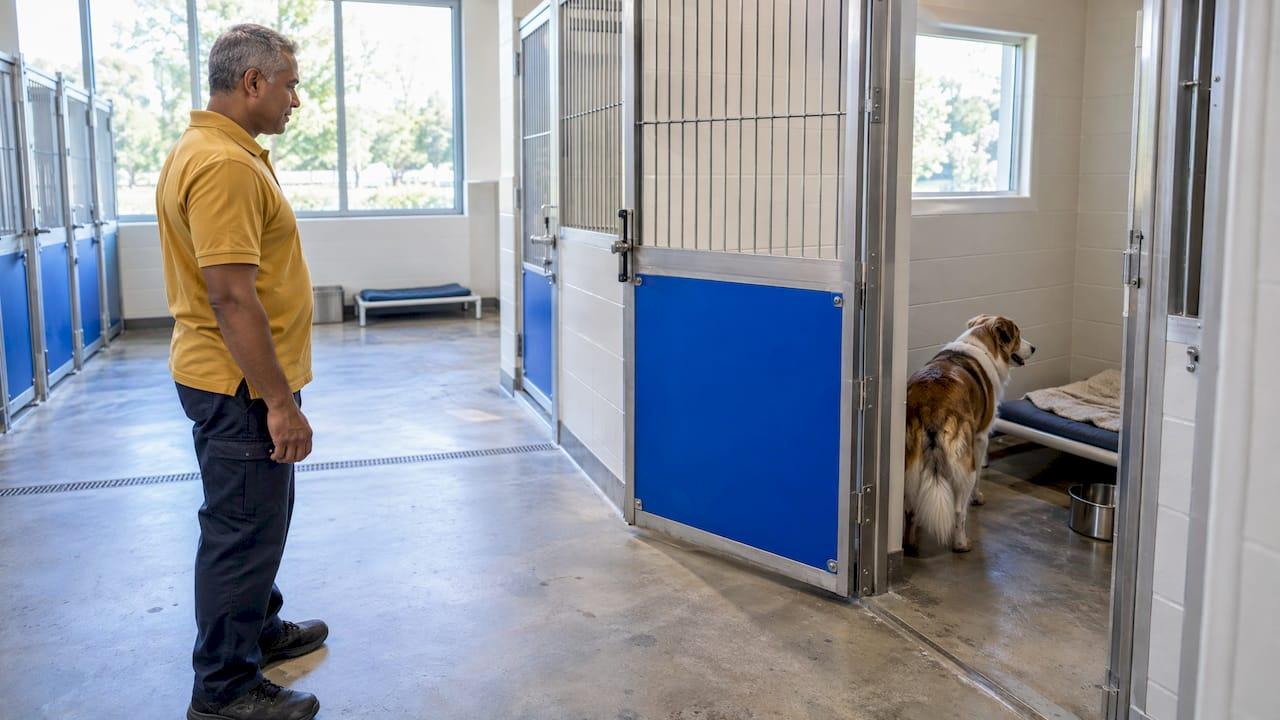
Yes, a reactive dog can be boarded. The stay goes best when you pick a facility that manages the environment, tell the staff everything about your dog's triggers, and meet the team before you book. This guide covers what to look for, what to ask, how to prepare, and which other options exist. It's written for dog owners in Harrisburg and Central Pennsylvania.
TL;DR
- Reactive dogs can be boarded. Be honest about triggers, and choose a place that limits stress, noise and foot traffic.
- Look for visual barriers, quiet kennel areas, calm periods, enrichment and staff who can read dog body language.
- Ask about emergency plans, medication handling and how the facility will update you if your dog struggles.
- Prepare with a stable routine, familiar bedding, a trial visit and a talk with your veterinarian.
- An in-home sitter or veterinary boarding fits some dogs better. We explain when below.
Table of Contents
- What reactive means and why boarding feels hard
- What a reactive-friendly boarding setup looks like
- Questions to ask before you book
- Be candid about triggers
- How to prepare your dog for a stay
- A starting point: the evaluation visit
- Perspective: why we start with the environment
- Other options: sitters, friends and veterinary boarding
- Daycare for a reactive dog
- Can reactivity be trained out?
- Boarding at Riverside Pet Club & Resort
- A simple plan from first call to pick-up
- FAQ
- Sources
What reactive means and why boarding feels hard
A reactive dog overreacts to a trigger. The trigger might be other dogs, strangers, loud noises or a new place. The reaction often looks like barking, lunging or freezing. It usually comes from fear or overexcitement, not meanness.
Boarding stacks several triggers at once: a new building, new smells, new people and other dogs nearby. That is why owners search for something different from a standard kennel. It's also why many owners say it is hard to find a place they trust.
The good news is that boarding is possible. One pet insurance guide says it can work if you are careful about the facility and honest about your dog's issues. Some places offer limited contact or solo time in the play yard.
What a reactive-friendly boarding setup looks like
You are not looking for a fancy lobby. You are looking for a setup that lowers stress. Veterinary guidance on choosing a boarding facility points to these features:
- Visual barriers, so your dog is not staring at other dogs all day.
- Quieter kennel areas with less foot traffic.
- Calm periods built into the day.
- A quiet area where a dog can decompress.
- Familiar items from home.
- Enrichment suited to your dog, such as appropriate food puzzles or toys.
The American Animal Hospital Association (AAHA) makes a similar point for veterinary clinics. It recommends barriers and distance between dogs, plus staff training in reading canine body language and stress behaviors. The same ideas apply to any place that houses nervous dogs.
The building matters
Air quality, temperature and noise all affect how settled a dog feels. UC Davis advises owners to check cleanliness and ventilation when touring a facility. At Riverside, our kennels are large and climate controlled, with an advanced air filtration system. We also run a 24-hour security system. Our aim is a healthy, comfortable space where your dog has room to settle. For more on what to look for, see our guide to climate controlled dog kennels.
The people matter more
A quiet room does not help if the staff can't read your dog. Good caretakers ask detailed questions about your dog's triggers and demeanor. One kennel guide suggests asking directly whether staff have experience with reactive dogs. If a facility asks you nothing, treat that as a sign to keep looking.
Questions to ask before you book
Bring this list to your tour or phone call. Ask each question in your own words and listen for specific answers.
About your dog's day
- Where will my dog sleep, and what can he see from there?
- Will he be walked or played with alone, or with other dogs?
- How do you handle potty breaks and walks so my dog does not meet others in passing?
- How much quiet time is built into the day?
- What enrichment will he get?
At Riverside, a 10 to 15 minute Riverview walk is available as an add-on for $10. Ask us how it fits your dog's routine.
About safety and health
UC Davis recommends looking at vaccination requirements. It suggests choosing facilities with strict policies that include rabies, distemper, parvovirus and Bordetella, and confirming current requirements with your veterinarian. It also advises checking veterinary support and how staff treat animals.
About emergencies and updates
Veterinary Partner lists the protocols a facility should have. Ask about:
- Emergency contacts and your veterinarian's details.
- Written permission for emergency treatment.
- Medication instructions, and whether trained staff give and record each dose.
- How they will tell you if your dog struggles, will not eat or seems stressed.
That last point deserves attention. You want a facility that calls you early, not one that mentions a problem at pick-up.
About handling
Some reactive dogs wear a muzzle for handling. AAHA says a well-fitted basket muzzle can prevent bites and still let a dog drink and take treats. It stresses that the dog should be voluntarily muzzle-trained with rewards and still handled calmly. If your dog uses one, tell the staff and bring it.

The same AAHA page warns that collars, harnesses, head collars and leads should not be left on unsupervised dogs because of injury and strangulation risk. Ask any facility what your dog wears when nobody is watching.
Be candid about triggers
The most useful thing you can do is tell the truth. Describe what sets your dog off, how he shows stress, what he does when he is over threshold, and what helps him calm down. Mention any bite history, resource guarding, or fear of men, hats, children or certain equipment.
It can feel awkward, but staff cannot plan around what they do not know. Figo's guidance is to describe your dog's issues candidly, ask about the facility's experience with reactive dogs, arrange a meet-and-greet and ask for testimonials.
A simple one-page note helps. Include:
- Triggers and early warning signs.
- Feeding routine and any food or toy guarding.
- Medication names, doses and times.
- What calms him: a favorite blanket, a quiet room, a certain treat.
- Your veterinarian's name and number, and your own emergency contact.
How to prepare your dog for a stay
Preparation starts a couple of weeks before drop-off. Guidance on boarding reactive dogs suggests the following.
- Keep the routine stable. Feed, walk and sleep at normal times in the days before the stay.
- Practice small separations. Short stretches in a crate or enclosed space help your dog get used to being apart from you.
- Practice unfamiliar handling. Gentle, treat-rewarded touching of paws, ears and collar prepares him for strangers.
- Do a trial visit or half-day. A short visit before an overnight stay lets your dog get familiar with the facility.
- Pack familiar items. Veterinary Partner recommends familiar bedding and scent items, along with suitable food puzzles or toys.
Talk to your veterinarian
If your dog is very anxious, call your veterinarian before the stay. Veterinary Partner says a vet may prescribe anti-anxiety medication or recommend a qualified trainer. AAHA notes that previsit anxiolytics or sedation may reduce fear and improve safety for highly anxious dogs. Only your veterinarian can decide whether that is right for your dog. Never give a medication that was not prescribed for him.
Plan for the first days
Expect a settling-in period. One guide says most reactive dogs need one to three days to decompress, and the first day is often the hardest. Staff updates in that window can reassure you. For longer trips, our guide to extended stay dog boarding covers how to plan.
A starting point: the evaluation visit
A short evaluation is one of the best ways to find out how your dog handles a new place. We offer a one-time evaluation for $20 through our daycare. It lets our team meet your dog and talk with you about his history before any overnight booking. Tell us about triggers up front so we can plan around them.
Perspective: why we start with the environment
Most stress at a boarding facility comes from the building and the pace, not from the dog. A loud, crowded space makes any nervous dog worse.
That is why we built Riverside around large, climate-controlled kennels with advanced air filtration. A comfortable, clean room is where a dog starts to relax. Our 24-hour security system adds peace of mind for you while you are away.
We also believe in asking owners a lot of questions. What does your dog fear? What helps him settle? Who should we call? Those answers shape his stay, and personal attention for every dog is the point of our resort.
If your dog is on edge in new places, call us before you book. We would rather hear the full story and plan well than guess.
Alexis

Other options: sitters, friends and veterinary boarding
A boarding resort is not the only way to care for a reactive dog. Which option fits depends on what triggers him.
| Option | Often a good fit when | Things to check |
|---|---|---|
| Boarding facility | Your dog does well with a structured routine and a calm, controlled space | Kennel setup, staff experience, vaccination rules, updates |
| In-home sitter | Your dog is triggered mostly by unfamiliar places | Training, first-aid knowledge, insurance, emergency vet plan |
| Friend or family | Your dog already knows and trusts them | Their ability to handle him, escape risks, other pets |
| Veterinary boarding | Your dog has medical needs or needs medication | Less space and socialization, and often higher cost |
The details come from two sources. For in-home care, Preventive Vet's guidance says dogs with fear of unfamiliar environments, separation distress, or reactivity toward unfamiliar dogs or people may do better with a sitter, particularly at home. It also says to check the sitter's training, first-aid knowledge, insurance, emergency plan, escape history and resident pets, and to arrange a meeting beforehand.
For medical needs, PetMD's overview says veterinary facilities offer trained medication administration and immediate care. They generally offer less space and socialization and may cost more.
If your dog has other health or behavior needs, see our guide to boarding special needs dogs. For help weighing all the choices for a trip, read vacation dog care. Need care fast? Our emergency dog boarding guide covers it.
Daycare for a reactive dog
Boarding and daycare are different. Group play suits some dogs and not others. The Animal Humane Society recommends asking any daycare about its evaluation and incident procedures and says not every dog or daycare is a good fit. It lists a missing incident procedure as a red flag. It says the same of a daycare that keeps admitting a dog that has repeatedly reacted intensely and started scuffles.
So evaluation comes first. Our daycare includes a one-time evaluation at $20. After that, enrichment daycare with play groups is $32 per day. If you add daycare to a boarding stay, daycare with boarding is $22 per day. Our post on reactive dog daycare explains how to tell whether group play is right for your dog, and our Pennsylvania daycare guide covers what to ask locally.
Can reactivity be trained out?
Many dogs improve, but no one should promise you a result. Training and boarding work best together.
The American Veterinary Medical Association says behavioral therapy may reduce harmful reactions. It adds that some pets may need medication under the guidance of a veterinarian or veterinary behaviorist. AAHA describes treats, toys and counterconditioning as tools that can reduce fear and stress. It cautions against offering food to dogs that become aggressive around it.
If you hire a trainer, look at the methods. The IAABC's standards of practice say positive reinforcement should be the primary training strategy. They oppose intentional pain, fear, intimidation, shock and other punishment-based methods.
Tell your boarding team what you practice at home. Keeping cues and rewards consistent helps your dog.

Boarding at Riverside Pet Club & Resort
We provide luxury dog boarding, daycare and grooming in Central Pennsylvania. Boarding is $45-50. Our large, climate-controlled kennels have advanced air filtration, and our 24-hour security system watches over the building. Our team focuses on safety, comfort and personalized care.

If you want a bath before pick-up, boarding with grooming add-ons runs $47-78, and the bath includes nails and ears. Our gentle dog grooming guide explains what to expect. You can see current details on our boarding page, or visit Riverside Pet Club to start. Prices are those published on our site. Check the page for the current list.
Keeping your dog busy matters too. Our list of dog enrichment activities has ideas to try at home before and after a stay.
A simple plan from first call to pick-up
- Call and describe your dog. Share triggers, bite history if any, medications and what calms him.
- Book an evaluation. Let the team meet your dog and see how he reacts.
- Talk to your veterinarian. Confirm vaccines and discuss any anxiety medication.
- Try a short visit. A half-day before an overnight stay helps him learn the place.
- Pack well. Bring familiar bedding, his usual food, medication with written directions and your one-page note.
- Ask for updates. Agree on how and when you will hear from the team.
- Keep pick-up calm. Greet him quietly and give him time to unwind at home.
FAQ
Can reactive dogs be boarded?
Yes. It works best when you choose a facility carefully and are honest about your dog's triggers. Some places offer limited contact or solo time in the play yard. A meet-and-greet and a trial visit make the first stay easier.
Do dog kennels take reactive dogs?
Some do, and policies differ, so ask before you book. Describe your dog's behavior and ask about staff experience with reactive dogs. At Riverside, call us and tell us about your dog, and we will talk through the best plan.
How long does a reactive dog take to settle in boarding?
One guide says most reactive dogs need one to three days to decompress, and day one is often the hardest. Familiar bedding, a steady routine before the stay and a trial visit can help. Ask the facility to update you if your dog struggles.
When is a sitter or veterinary boarding a better fit?
An in-home sitter can suit dogs triggered mostly by unfamiliar places, since they stay in their own routine. Veterinary boarding can suit dogs with medical needs or medication schedules. Ask your veterinarian which fits your dog.
Sources
- Boarding A Reactive Dog: Tips for Pet Parents
- Choosing a Boarding Facility for Your Dog, Veterinary Partner
- AAHA: Tips for reducing patient fear in the veterinary clinic
- UC Davis: Choosing a boarding facility for your dog
- Boarding for Reactive Dogs: How to Choose a Kennel
- AAHA: Handling anxious or reactive patients
- Boarding for Reactive Dogs: Your Complete Guide
- AAHA: Tips for Efficient Wellness Visits
- Preventive Vet: Choosing a Dog Sitter or Boarding Facility
- PetMD: The Top 5 Best Boarding Options for Your Pet
- Animal Humane Society: Questions to ask a dog daycare
- American Veterinary Medical Association
- IAABC Standards of Practice